Showing posts with label harvest. Show all posts

Monday, January 3, 2011

From Cooking up a Story: Giving Thanks to Turkeys

http://vimeo.com/17087945

 I know we are well past Thanksgiving or Christmas, but I found this video today that shows how turkeys should be harvested.  Like the last video with the artisan butcher, this video speaks of the respect that should be given to animals who are used for meat.  People who raise animals for meat do it because they like animals, oddly enough.  The ideal way to sell an animal that you have raised for meat, is to have the purchaser participate in the process of slaughter.  It sounds perhaps graphic and gory if you aren't used to it, but it is really true that the meal means much more to you if you understand the sacrifice that the animal has made.  I am actually getting pickier about who I will sell to, because I don't want the meat to be unappreciated.  Perhaps thanks should be given at every meal, like the good old days.

"Chef (and filmmaker) Daniel Klein recently visited LTD Farm where they were harvesting the turkeys they had raised for several Thanksgiving dinners. But they weren’t alone. Many of the eaters who had purchased one of the free range turkeys were invited to help in the process. As one participant said,
“To be able to make a conscious decision about eating meat, I think it’s important to understand the whole process, and I wanted to be able to engage in that discussion more than just a theoretical way.”
As you will see in the video, reverence was given to each turkey as it was selected, butchered, and plucked. It is graphic, but also very educational. As a meat eater, I believe it is important to remember that what you are eating on your plate was once a living thing and be grateful and mindful of the nourishment it is giving you. On this Thanksgiving, consider giving thanks to (your) turkey, too."

Tuesday, August 17, 2010

Summer Vacations and Fall Fairs

     As summer draws to a close, the days get shorter and the evenings cooler. Gardens are bountiful and harvest starts. For some, harvest begins earlier in the summer as hay is harvested for livestock for the winter. Once that is put away, it is time to send off lambs and harvest from the garden. In days past, in rural areas that were exclusively agricultural, the school year was planned around the agrarian calendar. School took a break in the spring for planting time, and took a break in the fall for harvest time. Urban schools had fewer breaks so the education of rural kids was not in balance with urban kids. When the educational system was reformed, it was decided to have a break for the summer which would still meet the needs of the farms. It allowed for a break for both teachers and students, but if you lived on a farm it didn't necessarily mean that you had a holiday. Many kids that live on farms are still expected to help out with the summer workload. Longer days mean longer work days on the farm.
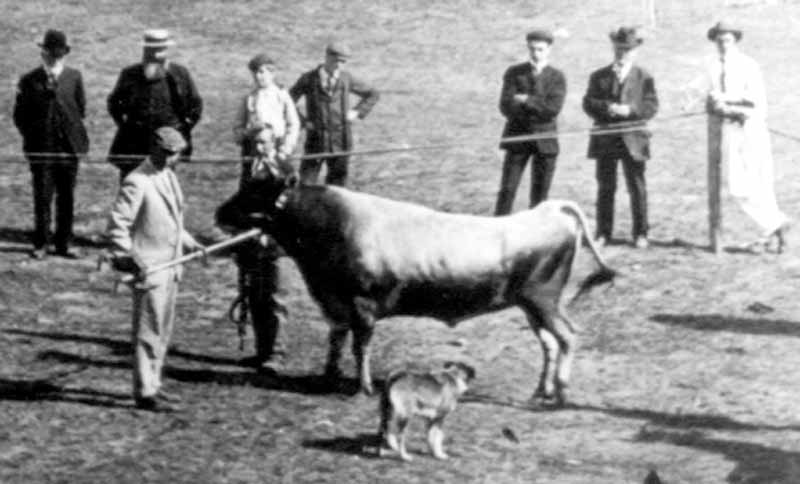
      In the Gulf Islands, beaches, boating and fishing, family barbeques and fall fairs have been a pleasant respite for those who farm. The workload in the summer would be set aside for the preparations for the fairs, and would give the family a day or two off from farm work to enjoy the fair and exhibit their livestock and produce. The fall fairs were also important as a marketing tool for farmers, and a way for farm suppliers to reach all the farmers in one place. Before the internet and modern farm marketing, farmers would advertise their breeding stock by attending exhibitions and bringing their best stock. They would also check out the competition, and might return home with a new bull or ram. In the Gulf Islands the young men would take the best cattle by ship to Vancouver or Victoria, walking the herds to the fairgrounds. It was probably a very exciting break from farming. Many prizes were won by the Gulf Island farmers, giving the farms here a good reputation. When I was young, fairs like the Pacific National Exhibition had livestock exhibitors from as far away as Alberta and Oregon. It was a great opportunity to meet farmers from all over and see how your animals compared to the competition. Now, the PNE only has a 4-H show.
     Many fairs have experienced a dramatic shift away from exhibitions that are geared to the farming community, towards entertainment and educational exhibitions for the public. The government provides funding to encourage fairs to educate the public about where their food comes from and how agriculture contributes to society. In the past, most people in the community farmed, even if it was a subsistence type of farming that allowed them to be self sufficient. With the interest in community and backyard gardening, and resilient “Transition Town” communities, we may be moving back to more self sufficiency in our food production. The educational displays at our fairs will no doubt include “how to” demonstrations for those that are interested in producing their own food.
     This year the BC government announced that it was giving $75,000 to the BC Association of Agricultural Fairs and Exhibitions to implement a five year strategic plan. The plan is designed to educate the public about the important role that fairs play in promoting agriculture and local food production, as well as to pursue long-term funding and partnerships. The government has cut funding to BC fairs in the past, and this looks like more funding cuts will be occurring in the future, leading to a need for greater community support for fairs, or greater partnerships and commercialization. As fairs evolve with the changing times, and as farmers make up only 2% of the population, the focus on fall fairs as a support for farming has been replaced with fairs that educate and entertain the larger non-farming public. Hopefully, the emphasis on the importance of agriculture to our society won't be lost.

IN THE NEWS – AUG 13 - Salt Spring Livestock Producers are eligible to receive a grant of $100,000 towards a mobile meat processing unit if they can raise matching funds. The grant could be as much as $150,000 if cut and wrap services can be provided at the same location. The funding comes from the Meat Transition Assistance Program, which is managed by the BC Food Processors Association. Currently the mobile abattoir will only be for Salt Spring Island. There is a possibility for other islands to also have use of the mobile abattoir. If you are from an outer island and are interested, please contact Barbara Johnstone Grimmer (250) 629-3817 or firhill@gulfislands.com.  If you would like more information on the Salt Spring initiative please call Margaret Thomson at (250) 537-4669.